
Jim Hiller says he has great respect for Auston Matthews and William Nylander, and is looking forward to see them soon. John Chayka adds they consulted anyone in the Leafs' ecosystem to do research. Chayka says what separated Hiller was players valuing him as a person.

The LeafsNation has no direct affiliation to the Toronto Maple Leafs, Maple Leaf Sports & Entertainment, NHL, or NHLPA
3 takeaways from Leafs head coach Jim Hiller’s introductory media availability
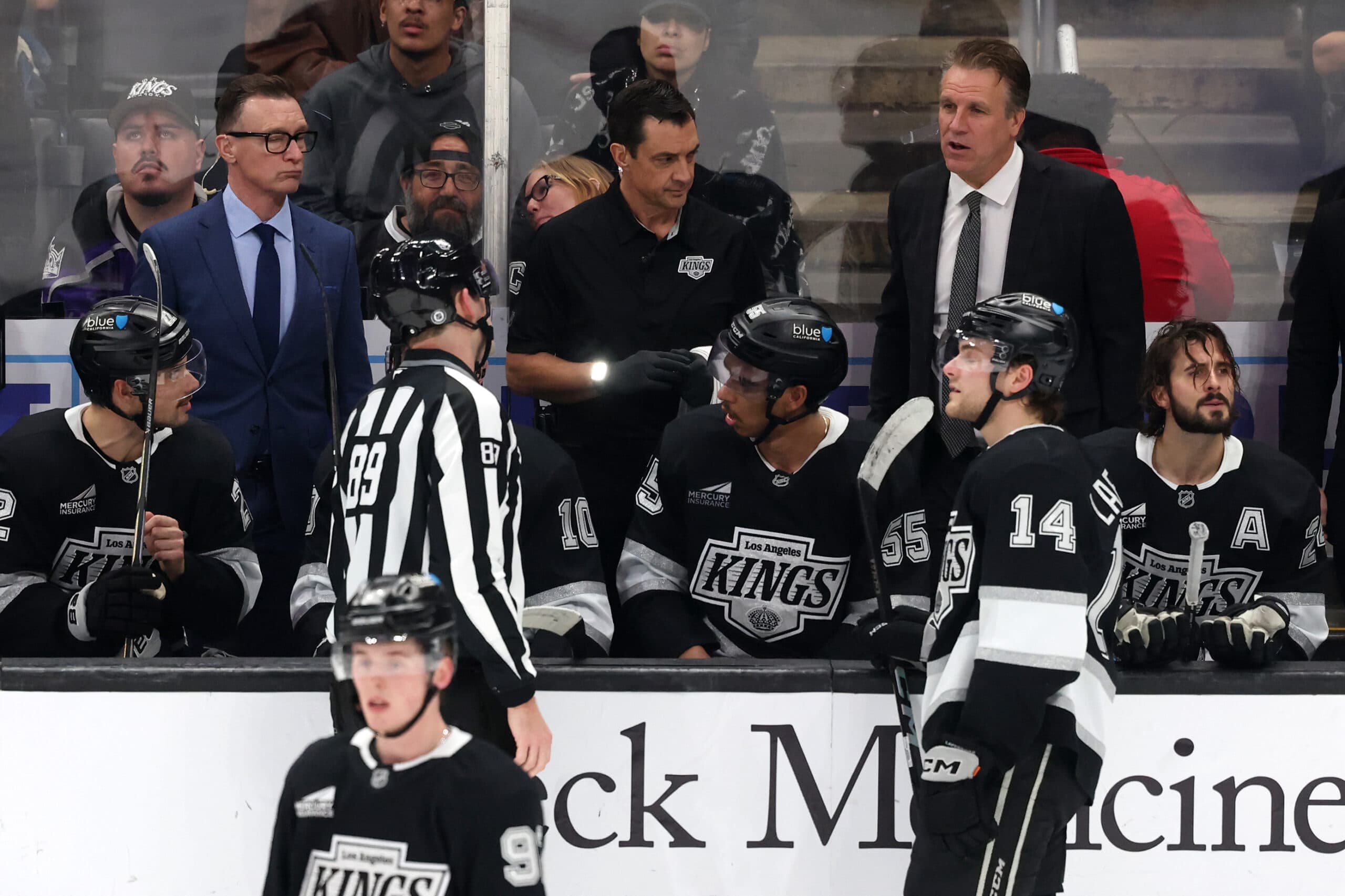
Photo credit: Kiyoshi Mio-Imagn Images

Jun 17, 2026, 15:00 EDT
Toronto Maple Leafs head coach Jim Hiller met with reporters over Zoom for the first time, after being appointed to the role on Wednesday. Hiller previously served as head coach of the Los Angeles Kings, before he was dismissed midway through the 2025-26 season. Toronto interviewed 55 people for the role, with five finalists for vying for the job. Hiller wasn’t previously reported as a finalist, and his hiring came as a surprise to many reporters and fans alike.
Hiller and general manager John Chayka spoke to reporters for 20 minutes, with a more formal introduction scheduled for next week.
Here are 3 takeaways from Jim Hiller’s introductory media availability
Jim Hiller was primarily hired because of his communication style and rapport with players
Jim Hiller was hired in part because he would represent a direct departure from Craig Berube. Berube was a player-friendly coach, but his communication with his players completely eroded during the 2025-26 season, with little buy-in to his tactics. Hiller has previous experience with the Maple Leafs as an assistant, and is excited to get back to work with Auston Matthews and William Nylander.
“To our players, this decision was made with you in mind,” Chayka said during his welcoming remarks. “We didn’t hire to satisfy a narrative or check a box. We hired based on what we believed would be best to support your growth, both individually and collectively. We hired someone who can create an environment where people are challenged, where accountability and trust can coexist, and where players have the opportunity to maximize their abilities. And ultimately, our success will be determined by your development your cohesion, your willingness to pursue something larger than yourselves. And we truly believe Jim is the best person to do that. When we think about Jim’s fit with our organization, I think it starts with alignment.”
Hiller spoke several times about how his coaching philosophy stems from strengthening the spirit of the team. At the risk of delivering more buzzwords to an aggrieved fan base, Hiller may be primarily employed to help fix a broken culture, where there was a clear disconnect between players, management and fans. Although Hiller may not have been everyone’s first choice, it’s clear that he’s looking to amend relationships with the stars, while ushering in a new era of competitiveness with a core that could be centred around Gavin McKenna.
Leafs GM John Chayka speaks about the love Toronto has for hockey, which he experienced at the Marlies game last night. Chayka says he hired head coach Jim Hiller with the players in mind. "We hired someone where accountability and trust can co-exist."
An emphasis on better skating, but there may not be a major tactical overhaul
Toronto went from a high-octane offensive group that habitually underperformed in the playoffs into a slower, more truculent team by design that was almost incapable of playing with pace. This may be the biggest amendment from Hiller, as he immediately emphasized a need for speed during his introductory remarks.
“The simplest one is skating, because I believe skating is the first chain in competing,” Hiller said. “And so, when you get on the ice and you’re skating and when I say skating, it’s up, it’s back, it’s there, it’s quick, it’s stop. It’s as quick and hard as you can do things. That’s how you start to know that your hockey team and the spirit of your team is starting to grow. So, never mind the offensive structure, the defensive structure, all those will be in place.”
Will there be a direct emphasis on better pace and some east-west variation? Toronto became slightly more mobile on the blue line on Tuesday by acquiring Emil Andrae (along with Samuel Ersson and a third-round pick) from the Philadelphia Flyers in exchange for Joseph Woll and Simon Benoit. Andrae speaks to the idea that Chayka is immediately trying to dismantle a slower, older group.
Hiller employed a 1-3-1 system with the Los Angeles Kings, and for the time being, did not reveal the strategy he wants to employ with the Maple Leafs.
“I think there are, I would call them relatively subtle, different tactics or systems throughout the league, they’re mostly pretty subtle,” Hiller said. “I think there’s a pretty standard template across the league that all coaches play with and I don’t necessarily believe that one is better than the other. I think really, and I’ll draw it right back to the spirit of the team and the commitment, anybody does everything together and feels good about it, I think there’s room to play different styles within that. That’s not job one. Job one is to be able to get the team to play and thrive and to be excited about playing whatever style and system there is. So, you know, I’ve done a bunch of different things.”
Team unity, cohesion and improved skating appear to be tenets of Hiller’s philosophy and we may get a better sense of what he wants from the Leafs, as the team restructures their personnel groupings this summer.
Maple Leafs are more than happy to reject convention in this next phase
Hiller wasn’t considered a leading candidate, until the Leafs announced his hiring Wednesday. Chayka told reporters that he wouldn’t discuss individual candidates and refused to answer if the Leafs interviewed Bruce Cassidy for the role. That’s more than fine, from our vantage point. There’s a clear appetite to reject the old guard with Keith Pelley supervising the organization, as Toronto also did not elect to interview big-ticket candidates such as Doug Armstrong for general manager. Chayka, Sundin and Hiller are now the Maple Leafs’ brain trust, and their application of analytics, an understanding of how modern superstars operate, and a return to high-octane offensive hockey, mixed in with a 1-3-1, could return the team back to playoff contention.


Breaking News
- Whether it’s deliberate or not, the Passion is back with the 2026-27 Leafs
- Around the NHL: Trade talks heating up on Blue Jackets’ Marchenko, Tortorella searching for new gig
- Around the NHL: Toews may sign 1-day contract with Blackhawks, Ducks’ Klepov signs ELC
- 3 trade candidates as Maple Leafs’ offseason continues
- Why there’s genuine optimism towards the Maple Leafs’ prospect pool for 1st time in recent memory

Toronto Maple LeafsTeam Cap Summary

Cap Summary
2026-27
2027-28
Projected Cap Hit
$106,752,382
$106,752,382
Projected Cap Space
-$2,752,382
$6,747,618
Current Cap Space
-$2,752,382
$6,747,618
Active Players
23/23
24/23
Draft Picks
Round
'26
'27
1
1
1
2
1
2
3
4
0