
Nation Sites
The Nation Network
The LeafsNation has no direct affiliation to the Toronto Maple Leafs, Maple Leaf Sports & Entertainment, NHL, or NHLPA
The Maple Leafs have a two-year window to adjust to life without Wes Clark
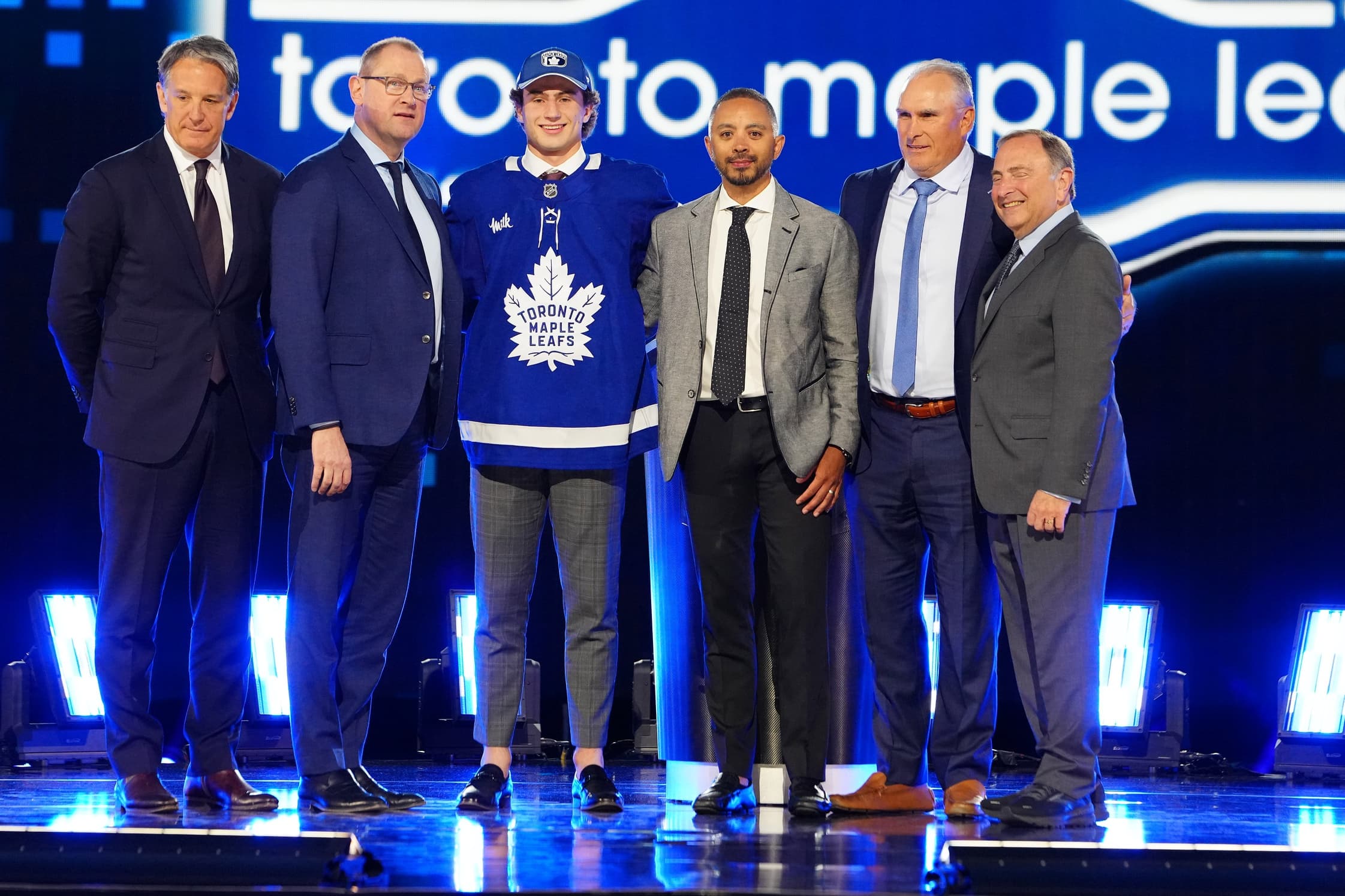
Photo credit: © Stephen R. Sylvanie-USA TODAY Sports

By Jon Steitzer
Jul 10, 2024, 08:00 EDTUpdated: Jul 9, 2024, 23:09 EDT
Losing Wes Clark isn’t ideal. In fact it sucks. During a time when the Leafs have heavily been dealing draft picks, he has managed to keep the Maple Leafs stocked with enough talent that the complaining has been kept to a minimum. While there was criticism around the Easton Cowan and Fraser Minten picks, it felt that the 2024 draft came with more trust for the Wes Clark process, and going off the board for Ben Danford was somewhat expected. Now that the trust seems to be there and there are no expectations of Leafs players placing highly on draft lists, Clark has chosen to depart for a promotion working for his old boss, Kyle Dubas.
The reality is that Clark leaving to work for Dubas was going to happen. If Brendan Shanahan and Brad Treliving are competent managers, they’ve identified his flight risk and been mitigating it and developing either a succession plan or a list to headhunt from.
Reality is here and the Leafs are facing it heading into a draft with only four selections and only one within the first four rounds. They still have an entire season to dwindle that number down even further. There shouldn’t be an expectation that the Leafs were heading into 2025 and doing much more than stocking depth, swinging for the fences, and dabbling in overagers. The situation isn’t dire that the Leafs attack the 2025 with much gusto and instead, it can be looked at as a trial run for whomever takes the helm of amateur scouting for the Leafs. That’s a nice little buffer before the 2026 draft, which, at the moment, looks like the Leafs are prepared to be active participants in.
While the loss of Wes Clark will be felt, there are silver linings in the clouds. For one, Brad Treliving’s draft track record is one of his strengths. He seems to have a good understanding of what is needed, and he can take a more active decision making process if needed. The Leafs also have Dave Morrison and Reid Mitchell who have been staples of the Leafs scouting game for a long time. The loss of Wes Clark isn’t Toronto going to a scorched earth condition, there’s just an understandable disappointment from no longer having Clark’s eyes, particularly on how to get the most out of late first round/second round selections. Maybe the Leafs will lean on Thommie Bergman picks earlier in the draft now.
What the Leafs are losing in Clark can probably be summed up best by Kyle Dubas in the Penguins’ press release:
“Having worked with Wes for many years, I have a deep trust in his ability to identify talent, lead staffs, advance our scouting process and methods, learn from mistakes to improve processes and to challenge my own thinking and planning on a near daily basis.”
The talent identification component and advancing of scouting processes and methods are what the Leafs will miss. Clark has a unique set of eyes that can’t be easily replaced but looking at other successful teams and seeing who might be persuaded by a MLSE payday and fancier title isn’t a bad start. The fact that Clark seemed very much in tune with knowing what players could thrive in bigger roles or benefit from a top tier player development program hopefully insights that have been passed onto his staff in Toronto and the Leafs won’t be without these improved philosophies. (That said, some of the newer scouts brought in under Dubas/Clark might also find their way to Pittsburgh in the coming months and years.)
The issue for recruitment in the short term is that top tier amateur scouting people might not see a team without draft picks and commitment to winning now as the best place to apply their craft. The Penguins gearing up for some tougher years might be the selling point for Clark.
One last thing to consider when reflecting on Clark’s departure is that is still somewhat of an unknown about how big an impact his draft picks will have on the Leafs roster. Easton Cowan and Fraser Minten might get a taste of the NHL this season, and Matthew Knies has looked solid in his favourable utilization. Most of the Clark picks have taken favourable steps but making a call on how successful those picks are still remains to be seen. If Clark ends up being a guy with a strong track record in the first couple of rounds of the draft that’s not as hard to replace as if learn that intriguing prospects like Noah Chadwick, Nikita Grebenkin, Dennis Hildeby, Ty Voit, and Nicholas Moldenhauer pan out. That will be another thing the Leafs will learn about in the next couple of years.
A lot of what people like about Wes Clark is driven from Easton Cowan’s post draft season and the praise from Kyle Dubas, and while that and promise of other prospects panning out can rightfully leave fans disappointed by the departure of the Leafs’ chief scout, there might be some overstating of the level of devastation to the organization.
The blow is absolutely cushioned by the fact that the Leafs are in a competitive window and less reliant on making draft selections than at any point in the past 20 years to improve their team and with a return to a growing salary cap, it’s even possible that Cliff Fletcher’s “draft, schmaft” philosophy could reign supreme.
You can look at this situation as Kyle Dubas waiting a year to get his guy and now Brad Treliving has a year to find his.
Breaking News
- Ben Danford scores first professional goal, Marlies take Game 1 of Calder Cup Final
- Maple Leafs must address lack of centre depth this offseason
- Pavelski intriguing, Danford deserves a shot, and incoming buyouts: Leaflets
- Marlies head coach John Gruden raves about Easton Cowan’s character
- Gruden hasn’t heard from Leafs & McKee thinks Danford is close to NHL ready: Leafs Morning Take