
Tyson Foerster makes it 1-0

Nation Sites
The Nation Network
The LeafsNation has no direct affiliation to the Toronto Maple Leafs, Maple Leaf Sports & Entertainment, NHL, or NHLPA
How the Maple Leafs are prioritizing rush defence, but coming up short through January
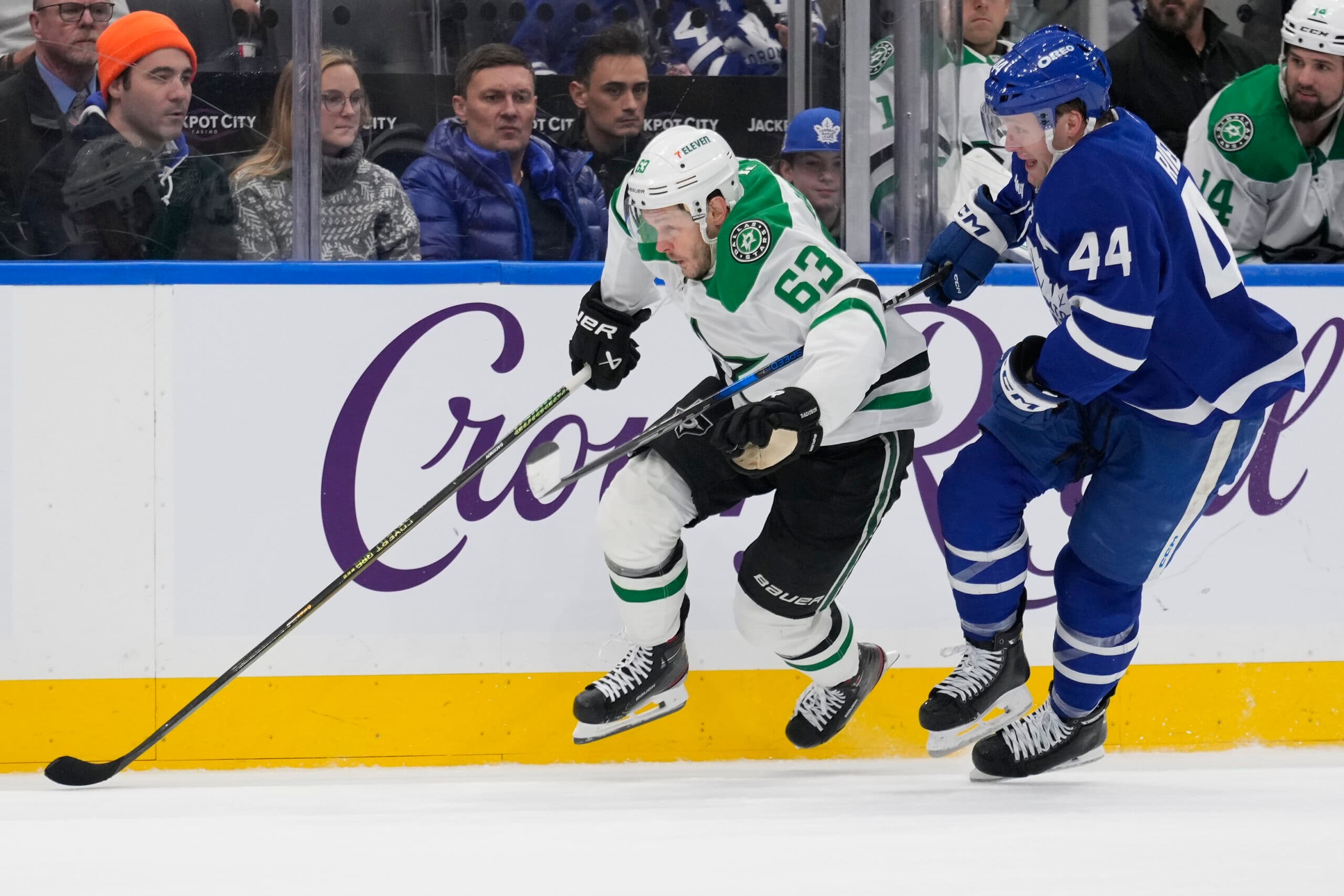
Photo credit: John E. Sokolowski-Imagn Images

Jan 17, 2025, 10:00 ESTUpdated: Jan 17, 2025, 11:37 EST
The start of the new year naturally invites reflection and Toronto Maple Leafs head coach Craig Berube outlined the greatest challenge for his team entering the second half of the season on January 5, prior to a game against the Philadelphia Flyers.
“Rush defence. I think that’s always a concern for every team, though,” Berube said. “It’s such a fast league. Teams transition so quick and the D are always up in the play. Just some better sort outs. I think there are a lot of times where we can manage the puck better and not give up opportunities to teams the other way. We’re getting better at it, trust me. I think our team has bought into putting the puck deep, and going to work, but there’s still improvement to be made.”
Berube has prioritized north-south hockey, an emphasis on zone exits, but through December and January, a continued focus on improving the Maple Leafs’ rush defence remains a priority. Toronto started out as one of the NHL’s premier defensive teams, but are falling short as a collective five-man unit, which has been cause for consternation, both real and manufactured.
“Off the top of my head, it definitely starts in the offensive zone,” Maple Leafs forward Max Pacioretty said after the morning skate on January 11. “Not to say that you want to be thinking defensively in the offensive zone, but smarter plays with the puck and not allowing the other team’s top players to roll through their coverage and come out of their zone with speed. If they are going to do that, you have to get on your horse and make sure that you’re at least pressuring them on the way back, backtracking to make it difficult on them, to make it easier for our D to stand up.
“The game is so different now in a sense, where you need every single person on the ice to play offence and defense, and it starts in the offensive zone, as weird and dumb as it sounds. Better decisions with the puck, and forwards being able to help out our D and like I said, have better gaps.”
Toronto has struggled at containing chances off the rush since the new year began. Prior to Thursday’s game against the New Jersey Devils, Toronto is allowing the fourth-most high-danger chances at 5-on-5, the sixth-most high-danger chances per 60 at 5-on-5, while allowing 1.19 high-danger goals against per 60 at 5-on-5, the 11th-worst total in the league via Natural Stat Trick since January 1.
So, what’s wrong with the Maple Leafs’ rush defence?
Jake McCabe missed four games due to an upper-body injury he suffered on January 5 in a fight against Flyers forward Garnet Hathaway, and it clearly had an impact on the lineup. McCabe has formed one of the NHL’s most effective tandems alongside Chris Tanev, but the pairing showed some diminishing returns with an increased workload — and Berube already identified rush defence as a priority issue prior to McCabe’s injury.
Through December 1-January 15, four Maple Leafs defence pairings played over 100 minutes at 5-on-5 — we want a reasonable sample to work from, after all. Here’s how they’ve fared:
Defence pairing | Goal differential | Expected goals for percentage | High-danger Corsi percentage |
Morgan Rielly-Philippe Myers | -2 (5 for, 7 against) | 54.31% | 53.01% |
Conor Timmins-Simon Benoit | -3 (4 for, 7 against) | 38.49% | 39.66% |
Oliver Ekman-Larsson-Chris Tanev | +5 (6 for, 1 against) | 56.80% | 57.14% |
Jake McCabe-Chris Tanev | -1 (8 for, 9 against) | 50.96% | 56.86% |
There are some easy takeaways, and these pairings are grouped by most-used, to least-used, respectively. Rielly and Myers have been primarily paired together. While his individual results and activity have taken a hit, Rielly has facilitated some of the best results of Myers’ career, which led to a two-year extension in January for the 27-year-old. Rielly-Myers often fail to cut off the point of attack on the rush, where the former has been guilty of allowing attackers too much space to enter the zone and beat the goalie with a clean, uncontested shot.
It’s a bit cruel to single out Rielly here, using a clip from a game where he scored the overtime winner, but this is a clear example of how he’s surrendering the point of attack way too easily. During the January 5 game against the Flyers, Rielly affords Owen Tippett, one of the NHL’s fastest skaters, way too much room to operate and he beats Dennis Hildeby cleanly for the game’s opening goal. This scenario happens far too often, especially for a player that is being asked to contribute offensively and simply hasn’t been consistent enough.
Scott Laughton ties it

Maple Leafs have been outscored 10-1 at 5-on-5 in their last 10 games with Morgan Rielly on the ice
Rielly is often losing matchups at the net-front as well, although it’s a commonality shared by virtually all of the Maple Leafs’ blueliners, save for Tanev, McCabe and Myers. And there are compounding effects for the Maple Leafs’ defencemen as well. Oliver Ekman-Larsson started off the year functioning as a true No. 3, but he’s logging 21 minutes per game — in a near-tie with Rielly — and it’s beginning to accumulate, especially off the rush.
Here’s an example from a January 9 game against the Carolina Hurricanes, as Ekman-Larsson clearly gets beat to the outside by Hurricanes forward Jackson Blake, who beats Joseph Woll cleanly.
Jackson Blake puts the Hurricanes in the lead
Ekman-Larsson’s physicality and zone exits are positives, but he will occasionally get caught out of position, while trying to suffocate the point of attack. Here’s an example from a December 23 against the Winnipeg Jets. After the game, Berube spoke about the key to fixing Toronto’s rush defence was in the details, and he’s right: Toronto’s top four defencemen, along with Myers, are capable of making quick fixes, while Rielly, Ekman-Larsson and Tanev could benefit from some load management in the second half of the year.
Mark Scheifele makes it 3-1
There’s no point in being delicate about the point, as Tanev has been outstanding for the Maple Leafs this season. He’s the NHL’s premier shot blocker, he breaks up passes, facilitates easy exits, and has been the right-handed shutdown defender the team has been seeking for the entirety of the Auston Matthews Era. Toronto controls 53.9 percent of the expected goals when he’s on the ice at 5-on-5, with a plus-seven goal differential. He hasn’t been infallible, but Tanev is the least of the Maple Leafs’ worries off the rush, where you can often see him pointing to his partner and directing traffic.
McCabe has also presented similar results, and he’s the best point-of-attack defender on the team through the first half of the season, routinely stopping players with excellent positioning and crushing hits before they get deep into the Leafs’ defensive zone. He plays with toughness and physicality and both him and Tanev clear the net-front rather easily. There are times when McCabe and Tanev get beat off the rush, but it’s often when they’re paired with one of Myers, Ekman-Larsson, Simon Benoit and Conor Timmins.
And when McCabe returned Thursday against the New Jersey Devils, he picked up where he left off, working in sync with Tanev to break up chances, in an outstanding all-around performance.
Thank you McCabe-Tanev
Here’s the indelicate point: Benoit-Timmins are getting crushed in their shared minutes together, while Benoit has facilitated poor results for Tanev, and Timmins with Ekman-Larsson or simply put: McCabe and Tanev are much better off when they’re not on the ice with Benoit or Timmins!
Benoit-Timmins are controlling a ghastly 38.49 percent of the expected goals at 5-on-5 since December 1, and while the former’s net-front physicality was an asset at the start of the season, he’s often losing battles in front, or he inadvertently screens the goalie, and he’s been awful at picking up opposing wingers in transition. Timmins often loses track of his man as well, and these issues are compounding for the Maple Leafs.
Here’s an example from a January 14 game against the Dallas Stars. Stars forward Matt Duchene is afforded so much room to enter the zone uncontested, he feeds it to Sam Steel, Benoit fails to contest his shot and Timmins just stares and watches as Logan Stankoven slams the puck home after multiple attempts. And this is a common occurrence that happens regularly when the Benoit-Timmins duo are on the ice. Benoit has been on the ice for at least one goal at 5-on-5 in 13 of his 22 appearances since December 1, which is untenable for a third-pair defender.

Stankoven was not taking no for an answer on this goal. 😅
There aren’t easy answers for the Maple Leafs, but a better effort at the point of attack, improved communication with the forwards, and some much-needed rest for Rielly, Ekman-Larsson, and perhaps Tanev as well could go a long way. Berube has instructed simple details, and the core elements are largely eluding the Maple Leafs’ defence corps, during a season where it suppressed chances at an elite rate for the opening two months of the campaign.
All stats from NHL.com and Natural Stat Trick, current prior to games played on January 16, unless noted otherwise


Recent articles from Arun Srinivasan
Breaking News
- Matthew Tkachuk lists Leafs’ Sergei Bobrovsky as ‘backbone’ of Panthers’ Stanley Cup-winning teams
- Who is the Maple Leafs’ ideal defensive partner for Darren Raddysh?
- Ben Danford credits Marlies’ coaching staff for helping transition to pro hockey
- Maple Leafs sign prospect goaltender Timofei Obvintsev to 1-year AHL contract
- New coaches, front office changes, and forward options: Leaflets

Toronto Maple LeafsTeam Cap Summary

Cap Summary
2026-27
2027-28
Projected Cap Hit
$106,752,382
$106,752,382
Projected Cap Space
-$2,752,382
$6,747,618
Current Cap Space
-$2,752,382
$6,747,618
Active Players
23/23
24/23
Draft Picks
Round
'26
'27
1
1
1
2
1
2
3
4
0