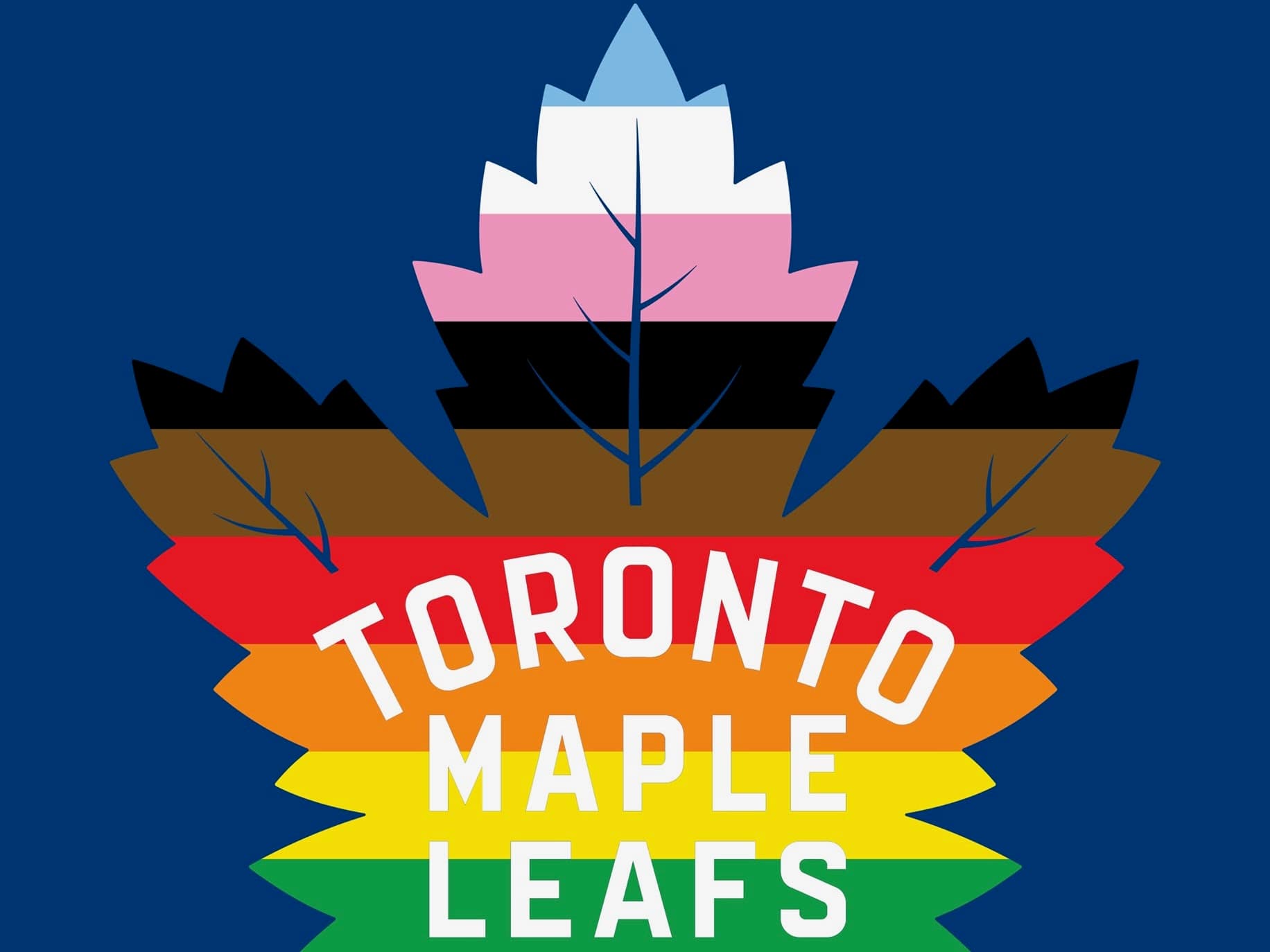
As a national institution with an 108-year-old history that holds a groundswell of insulated support, the
Toronto Maple Leafs carry a responsibility to the larger civic communities within their realm. Toronto is holding its annual Pride Celebration Game
against the St. Louis Blues on Tuesday, and the organization is actively taking a leading role in the NHL’s allyship towards LGBTQ+ communities.
Brock McGillis, co-founder of the Alphabet Sports Collective, a queer-led non-profit organization dedicated to creating a safer environment for people of all gender expressions and sexual identities in hockey, will be in attendance. McGillis will take part in an interview with
team host Ryan Leslie as part of the Unsportsmanlike Conduct pre-game show.
During the game, the Leafs will also host the Toronto Gay Hockey Association (TGHA) and TGHA will receive all proceeds from the auction tied to Tuesday’s game. TGHA will also receive a portion of proceeds from the Leafs’ pride collection, while TGHA commissioner Ben Baby will also be taking part in an interview as part of the in-game programming.
“Not just for hockey but with life, in all walks of life, in all jobs, I think it’s important that it’s relayed,” Rielly said in June 2019. “Being in Toronto, getting to live in Canada, work in Canada, be a part of a place that’s as diverse as Toronto is, I think it’s important that you’re a part of it and you embrace Toronto for Toronto and what it is, and the people here.”
It’s important for Rielly and the Maple Leafs to take on a leading role in the league’s allyship efforts towards LGBTQ+ communities. The
NHL often fails up to uphold its own Declaration of Principles, and it’s incumbent upon players and teams to make connections to the larger civic community that extends outside the hockey world.
Sports are often a mirror of society, and the NHL’s decision to ban Pride Tape for the 2023-24 season was widely reviled by the Maple Leafs organization. Rielly and general manager Brad Treliving were among the vocal members in the larger hockey community opposing the league’s policy.
“Nothing’s gonna change that,” Treliving said of his support for LGBTQ+ rights in 2023. “We’ll figure out our ways that we make sure that we do the right things and support as we always have and stay true to what we believe in. There’s always challenges in in the world, but that doesn’t affect how we support.”
“I think it’s great. It’s an opportunity to be supportive to that community,” Rielly told The Leafs Nation following Friday’s practice at the Ford Performance Centre. “I’m proud that the team has taken an opportunity to do it. I think there are opportunities for other causes and other communities that require support, or ask for support. It’s cool to be a part of a team that takes advantage of those opportunities.”
Rielly has spent his entire adult life in Toronto, as a member of the Maple Leafs, joining the team as a 19-year-old rookie during the 2013-14 season. The city of Toronto, and the Leafs’ fan base writ large have watched Rielly mature into one of the franchise’s greatest statesmen, and the 31-year-old reflected on how his relationship to Toronto has evolved during his tenure.
“It’s been one of the great joys of the last 13 years being able to live in Toronto,” Rielly said. “Being able to get to know a new city. This is home now, I live here full-time. When I was a young guy, I lived downtown and really got to know the city and have my neighbourhood spots. Being a little bit older, I’m not out and about as much as I used to be, but I still love the vibe of the west side, and all the different neighbourhoods and it’s a really cool place to live, and it’s one of the underlying joys that I’ve had about playing here.”
It takes a collective effort from the team to eliminate homophobia and transphobia from hockey, and it helps when you have the support of your teammates. Scott Laughton is perhaps the NHL’s greatest ambassador in fighting homophobia, doing extensive work with communities in Philadelphia
during his 11 years with the Flyers.
“Growing up here, and being here now, I feel very fortunate to be at home and be close to family, and at the same time, to live out your dream of playing for your hometown team. It’s a special feeling to be here at this time of year, and to get a full year under my belt,” Laughton told The Leafs Nation on October 2.
Laughton told The Leafs Nation that he’s looking to become active within the greater Toronto community, and mentioned his work with the Ronald McDonald House, where he was named as the inaugural winner of the Flyers Alumni Community Leadership Award during the 2023-24 season. As part of his nomination for the King Clancy Memorial Trophy during the 2023-24 season (which was awarded to Anders Lee of the New York Islanders) Laughton wrote an
extended essay for NHL.com, explaining why it’s important to use his platform to eradicate homophobia from hockey.
There’s a lot more work to do to promote inclusion for the LGBTQ+ community, but I know there are many leaders on and off the ice who will keep the movement going.
If I think back to my earliest NHL days in 2013, so much has changed. We’ve come a long way toward eliminating language and jokes that have homophobic undertones. Awareness of different identities is growing. And more and more players are confidently stepping up as allies and advocates for inclusion.
I hope each of our platforms will leave an impact that pushes our sport and society forward.
And to any LGBTQ+ kids who are looking up to players in the NHL: I hope they know hockey welcomes them, and supports them, and encourages them to be who they are. I hope they continue to play and love this game. And I hope we continue to do everything we can to create the environment they deserve.
“As a team, as hockey players, we’re still people, too,” Rielly said of Laughton. “There are things that are important to us, and as teammates, it’s important that you support one another. There are things that are important to us that we want to support and I think that’s great. There’s an opportunity when you play for the Toronto Maple Leafs, to have even a small impact on even one or two people. I think it’s important to guys to be vocal about what they support, what’s important to them and Scott’s a great example of that.”
Toronto is a sports-mad city, and the Maple Leafs are central to the city’s civic identity, or at the very least,
its sporting identity. It’s necessary for the Maple Leafs to reflect the values of the metropolis they represent. With a committed effort to reach out to support folks in the LGBTQ+ communities across the city, along with two of the NHL’s most active allies, the Maple Leafs are leading the way in a league that often is behind the times on a sociopolitical level.